
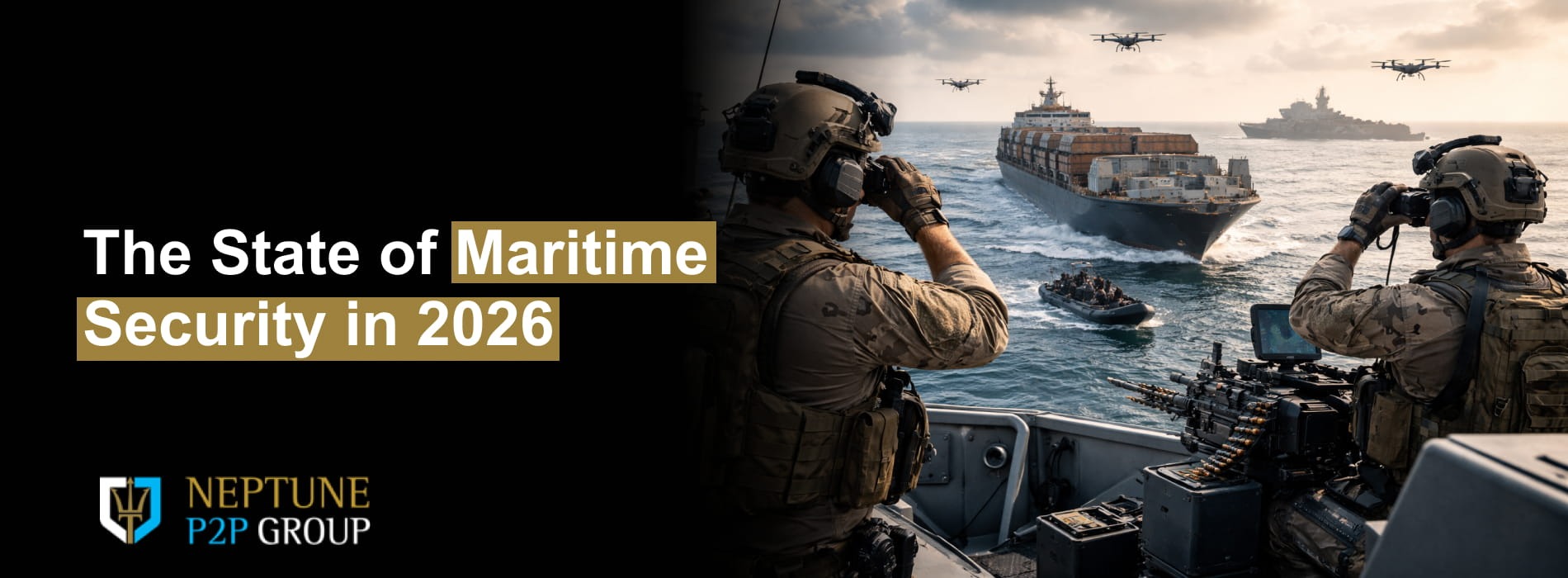
Introduction: Why 2026 Is a Defining Year for Maritime Security
The global maritime sector is navigating one of its most complex security environments in over a decade. The convergence of resurging piracy in Southeast Asia, persistent conflict-driven threats in the Red Sea and Gulf of Aden, escalating hybrid warfare in the Baltic and Black Seas, and the rapid proliferation of maritime cyber threats has created a multi-vector risk landscape that demands urgent attention from ship owners, fleet operators, maritime managers, and risk analysts worldwide.
Singapore — the world’s busiest transshipment hub and gateway to the Straits of Malacca — sits at the centre of this evolving picture. Vessels transiting through Singapore and the wider Asia-Pacific region are contending with rising incidents of armed robbery, opportunistic piracy, and sophisticated criminal networks exploiting gaps in multi-jurisdictional enforcement. Understanding these dynamics is no longer optional; it is a commercial, legal, and ethical imperative.
This deep dive from Neptune P2P Group — a specialist maritime security services provider operating across the AMEA region since 2009 — delivers a comprehensive assessment of the state of maritime security in 2026, the key threats facing operators, and the proactive measures available to protect crew, cargo, and commercial reputation.
1. The Global Piracy Resurgence: Numbers That Demand Attention
After a period of relative decline, global piracy and armed robbery at sea has returned to levels not seen since the height of the COVID-19 pandemic. The data is unambiguous and alarming.
| Threat / Indicator | Figure | Source / Context |
| Global piracy incidents H1 2025 | +50% | vs. same period 2024 (IMB PRC) |
| Singapore Strait incidents H1 2025 | 57 cases | Up from 15 in H1 2024 — nearly 4x increase |
| Singapore Strait full-year 2025 | 70+ incidents | Highest since records began in 1991 (IMB) |
| Global maritime incidents (3–9 March 2026) | 22 confirmed | Attacks in Hormuz, Arabian Gulf, Singapore Strait |
| Crew kidnappings — Gulf of Guinea | 87% of global total | H1 2025, despite lower incident count |
| Red Sea rerouting — TEU impact (March 2025) | 420,000 TEUs halted | Single Singapore Strait disruption |
These figures represent more than statistics — they reflect real disruptions to global supply chains, rising insurance premiums, and serious risk to the lives of seafarers. As one industry expert observed, everything arrives by sea; a single major incident can ripple across economies worldwide.
| Key Insight: The Singapore Strait recorded more piracy incidents in the first half of 2025 than in the entirety of 2024. For any vessel operator transiting this critical waterway, the risk calculus has fundamentally changed. |
Who Is Being Targeted?
Bulk carriers remain the most frequently targeted vessel type in the Singapore Strait, primarily during night-time transits in the eastbound lane. Incidents are predominantly opportunistic theft — perpetrators typically comprise two to five individuals boarding under cover of darkness — but the threat profile is evolving. Attackers are increasingly armed with knives and blunt weapons, and violence against crew is becoming more common.
Beyond bulk carriers, the threat spectrum extends to oil tankers, container ships, fishing vessels, and increasingly, high-value energy infrastructure vessels. The Gulf of Guinea continues to present the most violent piracy environment globally, with crew kidnapping for ransom remaining the primary criminal motive.
2. Regional Threat Breakdown: Five Critical Maritime Zones
2.1 Straits of Malacca and Singapore (SOMS)
The SOMS represents the most acute near-term threat for Singapore-based operators and vessels calling at Southeast Asian ports. The dramatic spike in incidents since late 2024 has been attributed to a confluence of factors: economic hardship in coastal communities following the COVID-19 pandemic, the diversion of regional naval resources toward South China Sea territorial disputes, and the exploitation of automated systems on modern vessels by organised criminal networks.
Regional authorities including ReCAAP ISC have issued six incident alerts since the beginning of 2025 and have introduced AI-powered systems to predict piracy hotspots. Indonesia has deployed drone patrols in response. Despite these measures, jurisdictional gaps across Indonesian, Malaysian, and Singaporean waters, combined with corruption within enforcement frameworks, continue to hamper effective interdiction.
- Night-time transits in the eastbound lane carry the highest risk
- Vessels should intensify watch-keeping and maintain sharp lookouts during darkness hours
- All incidents must be reported immediately to the nearest coastal state authority
- Armed maritime security teams provide the most reliable deterrent against boarding
2.2 Red Sea, Gulf of Aden & the Houthi Dimension
The Red Sea corridor remains one of the most dangerous maritime environments in the world, with an important but fragile development in 2026: a ceasefire has allowed some carriers to begin returning to Suez Canal routing. CMA CGM, the world’s third-largest shipping line, has indicated plans to resume regular Suez Canal transits. However, the security calculus remains deeply uncertain.
Security analysts have warned that the Houthis retain the technical capability to resume large-scale attacks against commercial shipping. Having developed sophisticated techniques, tactics, and delivery systems — including anti-ship ballistic missiles and drone swarms — they represent a latent threat that can be rapidly re-activated in response to regional political developments. Simultaneously, residual Somali piracy continues to operate in the Northwest Indian Ocean, with the risk of a compounding effect should Red Sea tensions re-escalate.
| Operator Advisory: Vessels returning to Red Sea routing must conduct thorough risk assessments prior to transit. Neptune P2P Group’s armed maritime security teams and real-time intelligence services are available for Red Sea and Gulf of Aden transits. |
2.3 Gulf of Guinea — West Africa’s Persistent Kidnap-for-Ransom Threat
While incident volumes in the Gulf of Guinea remain lower than the Singapore Strait, the severity of attacks is disproportionately high. This region accounts for the majority of crew kidnappings globally, with Niger Delta-based pirate networks demonstrating operational sophistication and a willingness to use violence to secure ransom payments.
Oil tankers and offshore support vessels remain the primary targets. Operations are typically conducted far offshore using motherships, enabling attacks well beyond the 200nm exclusive economic zone boundaries of coastal states. Crew welfare and kidnap insurance considerations must be central to any voyage planning for West African operations.
2.4 Black Sea and Baltic Sea — State-Backed Maritime Hybrid Warfare
The ongoing Russia-Ukraine conflict has introduced a category of maritime threat largely absent from commercial maritime security planning until recently: state-backed or state-influenced hybrid maritime warfare. The Black Sea has become the primary theatre for drone attacks, vessel seizures, and deliberate targeting of commercial shipping by government-affiliated forces.
In the Baltic, European states are tightening enforcement against Russia’s shadow fleet — the network of ageing, poorly maintained tankers used to circumvent Western sanctions on Russian energy exports. Several Baltic and Scandinavian nations are expected to increase vessel inspections significantly in 2026, potentially triggering Russian retaliatory actions against European subsea infrastructure including undersea cables and pipelines.
- Black Sea transits require specialist security risk assessments and war risk insurance coverage
- Baltic operators should monitor shadow fleet enforcement developments and potential infrastructure threats
- Business continuity planning should account for potential routing disruptions
2.5 South China Sea and Caribbean — Emerging Flashpoints
The South China Sea continues to present a low-probability but high-consequence risk environment. China’s assertive maritime posturing in contested waters, combined with ongoing territorial disputes involving the Philippines, Vietnam, and other ASEAN claimants, creates conditions in which commercial vessels could face interdiction, harassment, or detention.
In the Caribbean, US naval forces are actively engaged in enforcing sanctions against Venezuelan oil exports and protecting offshore energy assets in Guyana. Commercial vessels transiting these waters face a non-trivial risk of seizure or interdiction, adding a further layer of complexity to voyage risk planning in the Western Hemisphere.
3. Emerging Threat Vectors: Beyond Traditional Piracy
3.1 Maritime Cyber Threats
The digitalisation of shipping has created an expanded attack surface for cyber adversaries. Increasingly autonomous and connected vessel systems — from bridge navigation equipment and engine management systems to cargo tracking and port communications platforms — represent potential entry points for malicious actors. The consequences of a successful cyber attack on a vessel’s navigation or operational systems at sea are potentially catastrophic.
International maritime regulators have taken note. The IMO’s Maritime Cyber Risk Management requirements, which came into force under SOLAS, require operators to integrate cyber risk management into their Safety Management Systems. Despite this, implementation across the global fleet remains inconsistent, and crew awareness of social engineering threats — phishing, credential theft, and malicious software — remains inadequate.
- GPS spoofing and electronic warfare targeting maritime navigation systems is an increasing concern in conflict-adjacent waters
- Port and terminal systems represent high-value cyber targets with significant supply chain disruption potential
- Crew cyber security awareness training is a critical and often overlooked layer of vessel protection
3.2 Autonomous Weapons Systems and Drone Threats
The proliferation of low-cost, commercially available drone technology has democratised certain aspects of maritime attack capability. Houthi forces in Yemen demonstrated the operational utility of anti-ship drones during the Red Sea crisis; similar capabilities are increasingly available to non-state actors and criminal networks globally. The March 2026 attack on LNG carrier ARCTIC METAGAZ in the central Mediterranean by a suspected drone illustrates the expanding geographic footprint of this threat.
The UN Security Council has specifically identified autonomous weapons systems as a maritime security concern requiring sustained attention, alongside naval mines and cyber threats, in its 2025 open debate on maritime security.
3.3 Shadow Fleet and Sanctions Evasion
The growth of the global shadow fleet — vessels operated outside normal regulatory frameworks, often with falsified documentation, unknown ownership, and inadequate maintenance — presents both a security and a safety risk. These vessels, many of which carry sanctioned Russian, Iranian, or Venezuelan oil, operate with degraded safety standards that increase the risk of collisions, oil spills, and maritime incidents.
Beyond the direct safety risk, legitimate vessel operators must be alert to the legal exposure of transacting with shadow fleet entities and the reputational risks of doing so. Port state control inspections in European waters are intensifying, with Baltic and North Sea authorities actively targeting suspected shadow fleet vessels.
| Regulatory Note: Operators and managers should ensure due diligence processes cover sanctions screening of counterparties, charterers, and service providers to avoid inadvertent exposure to shadow fleet networks. |
3.4 Climate and Environmental Risks
Climate-driven changes to sea states, storm frequency, and Arctic route viability are increasingly intersecting with security considerations. Extreme weather events force vessels into irregular routing, creating opportunities for pirates operating in areas where naval protection is sparse. Meanwhile, the opening of Arctic shipping lanes creates new maritime domains that currently lack the security infrastructure and regulatory frameworks of more established routes.
4. The Singapore Perspective: Why This Market Demands Specialist Maritime Security
Singapore’s unique position as the world’s pre-eminent maritime hub — handling approximately three trillion US dollars in annual trade — means that security incidents in the Singapore Strait have an outsized global economic impact. The 2025 piracy surge, which halted the movement of approximately 420,000 TEUs of cargo during peak disruption, illustrates this vulnerability with stark clarity.
For ship owners, fleet managers, and maritime companies operating in Singapore, this environment creates both urgency and obligation. The legal duty of care to seafarers under international law, combined with the commercial imperative to protect cargo and maintain schedule reliability, makes investment in professional maritime security services not merely prudent but necessary.
Regulatory and Compliance Context
Singapore operates under the framework of the International Ship and Port Facility Security (ISPS) Code, which mandates security risk assessments, security plans, and the appointment of qualified Ship Security Officers (SSOs) and Company Security Officers (CSOs) for vessels operating in international waters. Compliance with these requirements is a flag state obligation, and non-compliance exposes operators to detention by port state control authorities in any SOLAS signatory port.
Beyond ISPS compliance, operators in high-risk areas should be aligned with the Best Management Practices for Maritime Security (BMP MS) — the consolidated and enhanced guidance published by BIMCO, ICS, IMCA, INTERCARGO, INTERTANKO, and OCIMF in March 2025, which replaced earlier regional BMP documents and provides comprehensive guidance on threat and risk assessment, reporting protocols, and protective measures.
5. How Neptune P2P Group Addresses These Threats
Neptune P2P Group has been protecting merchant and commercial vessels, fishing fleets, cruise ships, offshore installations, and energy assets since 2009. Owned and operated by former British and French Special Forces personnel, the company has completed over 8,500 individual security tasks across the AMEA region with a 100% success rate for anti-piracy operations. Here is how Neptune P2P Group’s maritime security services directly address the threats outlined in this briefing:
Armed Maritime Security Teams (MSTs)
Neptune P2P Group deploys armed and unarmed Maritime Security Teams to vessels transiting high-risk waters across the Gulf of Aden, Indian Ocean, Gulf of Guinea, Singapore Strait, and other elevated-threat environments. Teams are sourced from specialist military backgrounds, rigorously vetted, and trained to international standards including compliance with international law governing the use of force at sea.
The company maintains vessel-based armouries at strategic locations worldwide, enabling rapid deployment and reducing transit times for embarked security teams. This pre-positioning is critical in the Singapore context, where short-notice requirements are common given the high volume of vessels transiting the Straits.
- Armed deterrence: the demonstrated presence of an armed security team has proven to be the single most effective deterrent against piracy
- 100% boarding prevention record for transits with Neptune P2P Group MSTs embarked
- Teams operate in strict accordance with flag state regulations and international law
Anti-Piracy Services and Voyage Risk Management
Neptune P2P Group provides comprehensive anti-piracy services that extend beyond the provision of armed security teams. Pre-voyage security risk assessments, route planning through the Maritime Security Communications with Industry (MSCI) framework, and real-time intelligence support from the company’s 24/7 operations centre ensure that vessel masters and fleet managers have the most current threat picture before and during a transit.
For vessels transiting through multiple high-risk zones — for example, a voyage from Singapore through the Indian Ocean, Gulf of Aden, and Red Sea to European ports — Neptune P2P Group provides end-to-end security planning and team handover coordination to ensure continuity of protection.
Maritime Security Training
Neptune P2P Group’s training academy delivers ISPS-certified courses including Ship Security Officer (SSO), Company Security Officer (CSO), and Port Facility Security Officer (PFSO) qualifications. These courses are essential for ensuring regulatory compliance and building organic security capability within vessel crews and fleet management teams.
Crew training in Security Awareness in Foreign Environments (SAFE) equips seafarers to identify and respond to security threats, reducing the risk of successful boarding and improving incident reporting discipline. This training component is particularly relevant for vessels transiting the Singapore Strait, where situational awareness and timely reporting to ReCAAP ISC have been identified as critical mitigation measures.
Security Risk Management and Intelligence
Beyond physical security, Neptune P2P Group provides security risk management advisory services that support vessel operators and fleet managers in building resilient security frameworks. Monthly Maritime Intelligence Reports, Incident Reports, Global Risk Maps, and bespoke Spotlight Reports provide decision-makers with the intelligence needed to make informed routing, scheduling, and risk transfer decisions.
6. Practical Guidance: What Ship Owners and Fleet Managers Should Do Now
The threat environment described in this briefing demands a proactive and structured response. The following steps represent a baseline for maritime operators seeking to protect their vessels, crews, and commercial interests in 2026:
- Conduct voyage-specific security risk assessments
- — ensure SSO, CSO, and Ship Security Plans are current, tested, and flag-state approved
- — the United Kingdom Maritime Trade Operations centre provides free reporting and advisory services for vessels in high-risk areas
- — particularly for vessels transiting SOMS
- for transits through the Singapore Strait (eastbound at night), Gulf of Aden, Indian Ocean, and Gulf of Guinea
- in security awareness and incident reporting protocols
- — particularly bridge systems, navigation equipment, and port communications interfaces
- cover, particularly for Red Sea, Black Sea, and Gulf of Guinea voyages
- for real-time intelligence support and rapid response capability
| Neptune P2P Group Advisory: If you are planning transits through any of the high-risk zones identified in this briefing, Neptune P2P Group’s team of maritime security specialists is available 24/7 to advise on threat levels, security team requirements, and voyage risk management. Our Singapore-focused maritime security services page provides further detail on our regional capabilities. |
Conclusion: Prevention by Protection
The maritime security environment in 2026 is characterised by a broadening and intensifying threat landscape. Piracy in the Singapore Strait has reached historic highs. The Red Sea remains contested. State-backed hybrid warfare has introduced new threat vectors in European waters. Cyber threats are growing in sophistication. And emerging piracy environments in the Caribbean and South China Sea add further complexity to global voyage risk planning.
In this environment, the risk of complacency is acute. The commercial and human costs of a security incident at sea — the loss of cargo, the disruption to supply chains, the trauma to crew, the reputational damage to operators — are significantly greater than the cost of professional security risk management.
Neptune P2P Group‘s guiding principle — Prevention by Protection — reflects a fundamental truth of maritime security: the most effective intervention is the one that ensures an incident never occurs. Through armed maritime security teams, comprehensive intelligence, and specialist training, Neptune P2P Group provides the capability and expertise to keep your vessels, crew, and cargo safe in the world’s most challenging maritime environments.
About Neptune P2P Group
Neptune P2P Group is a global security risk solutions company delivering intelligence-led risk management, maritime security, protective security, and training worldwide. Founded in 2009 and owned and managed by former British and French Special Forces personnel, Neptune P2P Group has completed over 8,500 individual security tasks in high-risk maritime and land-based environments across the AMEA region. The company’s maritime security services in Singapore span armed and unarmed vessel protection, anti-piracy operations, cruise ship security, fisheries protection, and comprehensive security risk management advisory services. Neptune P2P Group’s 24/7 operations centre, real-time intelligence capability, and strategically pre-positioned maritime security teams provide operators with the agility and expertise required to respond to today’s complex threat environment.
