
Event. Israel and the United States launched joint air and missile strikes on Iran this morning, targeting key military and government facilities, including areas in and around Tehran. President Trump has announced that the intention is to force regime change in Iran. In response, Iran has launched its own counter-strikes, with missile and drone attacks reportedly fired toward Israel and U.S. military positions across the region including U.S. bases in multiple countries, including Kuwait, Qatar, Bahrain, and the United Arab Emirates. Civil defence alerts and sirens have sounded in Israel, Jordan, Bahrain, KSA, Qatar and Kuwait, with mobile warnings urging civilians to shelter. In Israel, authorities have declared a state of emergency and closed schools and workplaces temporarily as part of civil defence precautions, reserve forces have been mobilised. Unconfirmed reports highlight casualties in Bahrain; official reports in the UAE confirm an Asian fatality in Abu Dhabi.
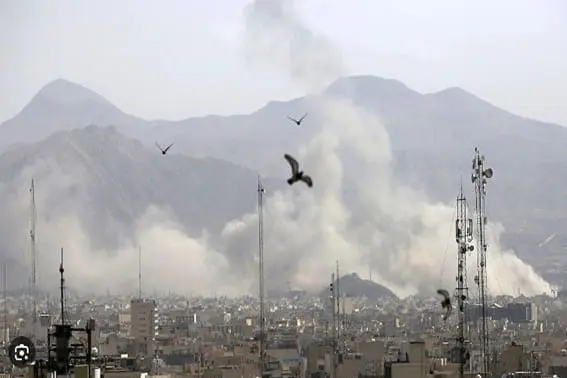
Fig 1. Missiles have hit targets in Iran
Comment. In recent weeks, the U.S. has imposed more sanctions on Iranian oil production and had warned that it would carry out strikes on targets in Iran if it did not agree to cease its uranium enrichment program. The U.S. also wanted negotiations to include ballistic missile production (Iran are replenishing their stock at a rate of 30 a day, 900 a month), and the Iranian use of proxy forces (Houthi, Hezbollah, Hamas, and wider use of diaspora and organised crime). In recent weeks, in response to U.S. rhetoric and demonstration of military capability, Iran has conducted ballistic missile tests, and war games in and around the Strait of Hormuz, including joint maritime exercises with Russia. Electronic interference has too significantly increased in the Arabian Gulf and Gulf of Oman over the past month. The Houthis (an Iranian Proxy) has stated today that attacks will recommence in the Red Sea against vessels with links to Israel and the U.S. Of concern, while many countries and companies will have established contingency plans ahead of any potential Iran/U.S./Israel conflict, it is unlikely many focussed on the ramifications of regime change.
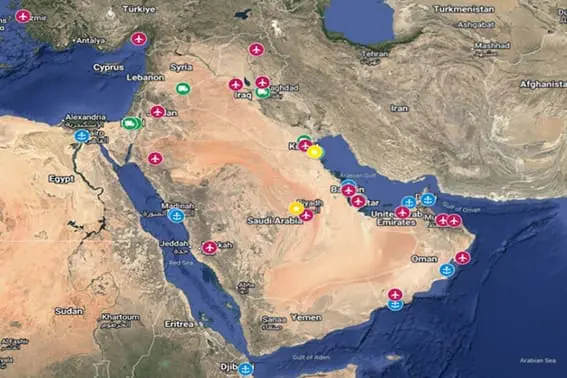
Fig 2. Location of U.S. bases in the Wider Middle East
Assessment. Regime change, as announced by President Trump earlier this morning, presents a very different potential response from Iran. A ‘backs-against-the-wall’ existential survival response will not only focus on Israel and U.S. military bases across the region, but much wider. Although their capability has been significantly depleted, Hamas and Hezbollah could reopen the front on Israel’s borders. Likewise, the Houthi’s will likely re-open the front in the Red Sea. It is however the more surreptitious attacks that could provide Iran a competitive advantage. Iran has a history of using its diaspora, sleepers, organised crime and petty criminals as a proxy to conduct ‘deniable’ attacks in foreign countries. With nothing to lose or potentially looking to gain a foothold for any future negotiations (by demonstrating its insurgent capabilities) there remains a threat of terrorism type attacks again western interests and local governments across the region. The UAE, for example, has witnessed unprecedented cyber-attacks over the past two weeks.
It is recommended that any employees working or visiting the Middle East avoid locations with official U.S. authority links (US bases, Embassies, and Consulates) and have a contingency plan for airspace closure which is likely to be intermittently regular for the foreseeable future. MEDEVAC contingencies should be considered; if local medical facilities are not at an appropriate standard, medically vulnerable staff should be moved prior to any potential airspace closure. Persons should also avoid large gatherings particularly those frequented by Westerners.
If you are advised to take shelter, stay indoors or find the nearest safe building or designated shelter. An interior stairwell or a room with as few external walls or windows as possible may provide additional protection.
For the maritime industry, electronic interference with ships’ navigation aids has increased in the approaches to the Strait of Hormuz and is likely to grow in intensity. There is likely to be further retaliatory strikes by Iran. U.S. maritime assets will be targeted, and it is possible Iran may try to block the Strait of Hormuz.
Ship operators should consider rerouting their vessels at this time of heightened threat. Vessels should also strengthen bridge watches, maintain enhanced visual and radar lookout, and ensure all crew are briefed on the developing threat picture. Given the increasing likelihood of GNSS/GPS degradation, Masters should place greater reliance on traditional navigation methods and frequent manual cross‑checks. Operators are advised to conduct Vessel Affiliation Checks prior to entering high‑risk areas to identify any links that could elevate exposure. Emergency communications and response plans should be reviewed and confirmed, with redundancy in place should primary systems be disrupted. Finally, routing should remain flexible, with Masters prepared to adjust transit timings, speed, or track at short notice as the regional situation continues to evolve.
