
Situation. Irregular human migration (IHM) is a persistent and globally diverse problem, driven by a combination of conflict, persecution, political instability, poverty, organised crime, climate stress, and limited legal migration pathways. In 2025, it is estimated that up to 200,000 people embarked on sea crossings. Major sea routes include the Mediterranean Sea (North Africa to Southern Europe), the Atlantic route from West Africa to the Canary Islands, the Bay of Bengal and Andaman Sea (Myanmar/Bangladesh toward Southeast Asia), and the Caribbean toward the United States. Smuggling networks frequently facilitate these journeys using unseaworthy fishing boats, inflatable craft, or overloaded wooden vessels, often departing at night to avoid interception. Many migrant routes cross commercial shipping lanes, and ships are often requested to assist in rescue situations. Since 2014, it is estimated that over 30,000 migrants have gone missing in the Mediterranean alone. Masters and ship owners, obligated to assist, find themselves in a difficult moral, legal, and sometimes dangerous predicament when they encounter human migrants on the high seas.
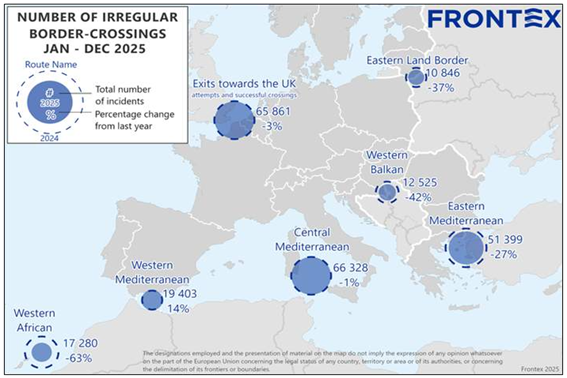
Fig 1. Mediterranean Sea Crossings are the Primary Global Migration Route (Frontex)
Comment. Obligated by SOLAS regulations to assist persons in distress (when safe to do so), a ship may be requested by a Regional Rescue Coordination Centre to go to the aid of a vessel carrying hundreds of migrants. This puts the ship and crew at risk and requires careful preparation and assessment of the situation in order to ensure the safety of the crew and those being rescued. Even after a rescue is successfully completed, there may be complex legal issues to address regarding where the survivors are landed. The ship’s owner/operator will need to seek an agreement with a suitable country or state for the disembarkation of those rescued. Difficulties may occur if persons claim to be refugees or asylum seekers or indicate in any way that they fear persecution or ill-treatment if disembarked at a particular place. Key principles prescribed by international refugee law must be upheld. There is likely to be a financial impact on any vessel involved in a rescue, such as tankers with a tight laycan schedule; the charterers might need to rework the cargo or the laycan. Ultimately, commercial vessels are not Non-Governmental Organisations (NGOs) and need to get back down to business at the earliest opportunity.
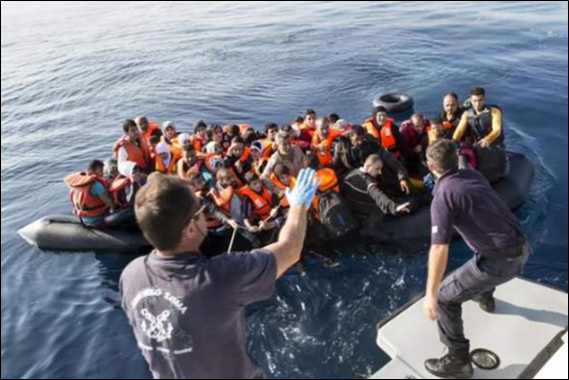
Assessment. While wars rage and famine bites in many regions of the world, IHM will remain an issue. From a maritime perspective, any ship may face a rescue situation, whether off the coast of West Africa, in the Mediterranean, in SE Asia, or in the Caribbean. The risks are the same for the receiving ship and those being rescued. The primary aim of any ship is to save lives, and this requires careful preparation and management. The presence of a large number of refugees may introduce security challenges; there exists a potential for criminals and even terrorists to be among the survivors, and some could be carrying arms or weapons. Implementing security measures and guidelines to manage such a situation is crucial for the safety and well-being of all parties involved. Onboard security measures should be protective, proportionate, and focused on preventing loss of control of the ship while maintaining humane treatment. Ships should have a robust set of Standard Operating Procedures, reinforced by crew training and logical planning, to address a migrant rescue scenario. Crew training for rescuing migrants at sea should cover SAR competence, crowd management, conflict de-escalation and resolution and onboard safety/security, as these incidents can quickly escalate into Mass Rescue Operations (MROs). Equipping the crew with the necessary skills and knowledge to manage refugee rescue scenarios is a cornerstone of effective preparedness. Training sessions should cover medical emergencies, communication strategies, cultural sensitivity, and crowd management.
