
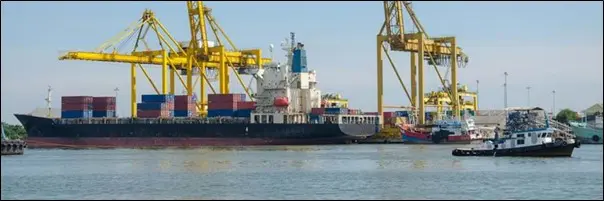
Ports are the vibrant arteries of global trade, with over 80% of international commerce flowing through their gates. Their critical role, however, also positions them as prime targets for a spectrum of threats, from terrorism and contraband smuggling to sophisticated cyberattacks. The International Ship and Port Facility Security (ISPS Code), adopted in 2004 under the Safety of Life at Sea (SOLAS) Convention, serves as the bedrock of maritime security, providing a global framework to safeguard these vital hubs and ensure the resilience of port operations.
While the ISPS Code has undeniably standardized security measures across 174 SOLAS member states and over 10,000 port facilities, the true challenge lies in transcending mere compliance to achieve robust, proactive security. This blog explores how ports can effectively bridge this gap, transforming regulatory adherence into tangible protection against evolving maritime threats.
The Mandate vs. The Reality: Understanding the Gap
The ISPS Code, with its mandatory Part A and recommendatory Part B, outlines essential measures for security assessments, security plans, and the designation of vital roles like the Port Facility Security Officer (PFSO), Ship Security Officer (SSO), and Company Security Officer (CSO). It sets the framework for three security levels, dictating escalating measures in response to increasing threat perceptions.
However, statistics and real-world scenarios highlight the persistent gap between theoretical compliance and practical security. A recent Safety4Sea report in August 2024 noted an increase in deficiencies related to ISPS Code on Marshall Islands flagged vessels, particularly concerning control of ship access, log-keeping, and the frequency of security drills, leading to vessel detentions. Such instances underscore that ticking boxes on a checklist does not always translate to an impermeable security posture. Challenges such as inadequate drills, limited supervisory time (e.g., gangway watch), and suboptimal security training can undermine even the most diligently crafted plans.
Bridging the Gap: Strategies for Enhanced Port Security
Achieving high-value port security goes beyond minimum requirements. It necessitates a strategic investment in people, processes, and technology, fostering a culture of continuous improvement and proactive threat mitigation.
- Proactive Risk Assessment and Dynamic Security Plans.
Effective port facility security begins with a comprehensive and regularly updated Port Facility Security Assessment (PFSA). This involves a deep dive into identifying potential threats and vulnerabilities, safeguarding personnel, protecting critical infrastructure, and implementing robust physical access controls. It’s not a one-time exercise; the assessment must be dynamic, adapting to changes in the maritime threat landscape and incorporating lessons learned from incidents or drills.
- Comprehensive and Continuous Training.
Well-trained personnel are the frontline of defence. While the ISPS Code mandates specific training for PFSOs, SSOS, and CSOs, bridging the security gap demands going further.
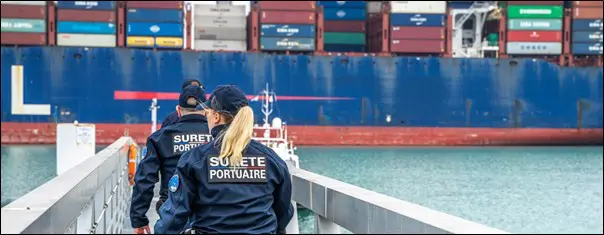
Training programs should:
- Incorporate real-life scenarios and simulations. Moving beyond theoretical knowledge, practical drills enhance readiness and response capabilities.
- Address emerging threats. Regular updates on current protocols, including cybersecurity best practices, are crucial.
- Foster a culture of security awareness. Every individual within the port environment, from security personnel to general staff, plays a role in collective security.
- Leveraging Advanced Technology for Real-Time Intelligence.
The digital transformation sweeping across the maritime industry offers unprecedented opportunities to enhance security beyond traditional measures.

- Artificial Intelligence (AI) and Machine Learning (ML). For predictive analytics, anomaly detection in vast datasets, and intelligent surveillance.
- Internet of Things (IoT). Sensors and connected devices can provide real-time monitoring of access points, perimeters, and cargo.
- Biometric Systems. For secure and efficient access control, enhancing personnel and cargo flow while maintaining high security.
- Digital Twins. Creating virtual replicas of port facilities can aid in scenario planning, security system optimization, and emergency response simulations.
Leading ports are already setting benchmarks. The Port of Rotterdam utilizes AI-powered cameras and sensors for enhanced situational awareness, while the Port of Singapore employs drone patrols and advanced data analytics, setting a gold standard for modern port security and supply chain resilience. Similarly, ports like Los Angeles and Long Beach are investing heavily in smart port technologies that integrate security measures with operational efficiency.
- Fortifying Against the Invisible Threat: Cybersecurity.
As ports become increasingly interconnected and reliant on digital systems, cybersecurity has emerged as a paramount concern. The maritime industry is a prime target for cyberattacks, which can disrupt operations, compromise sensitive data, and even impact physical safety.
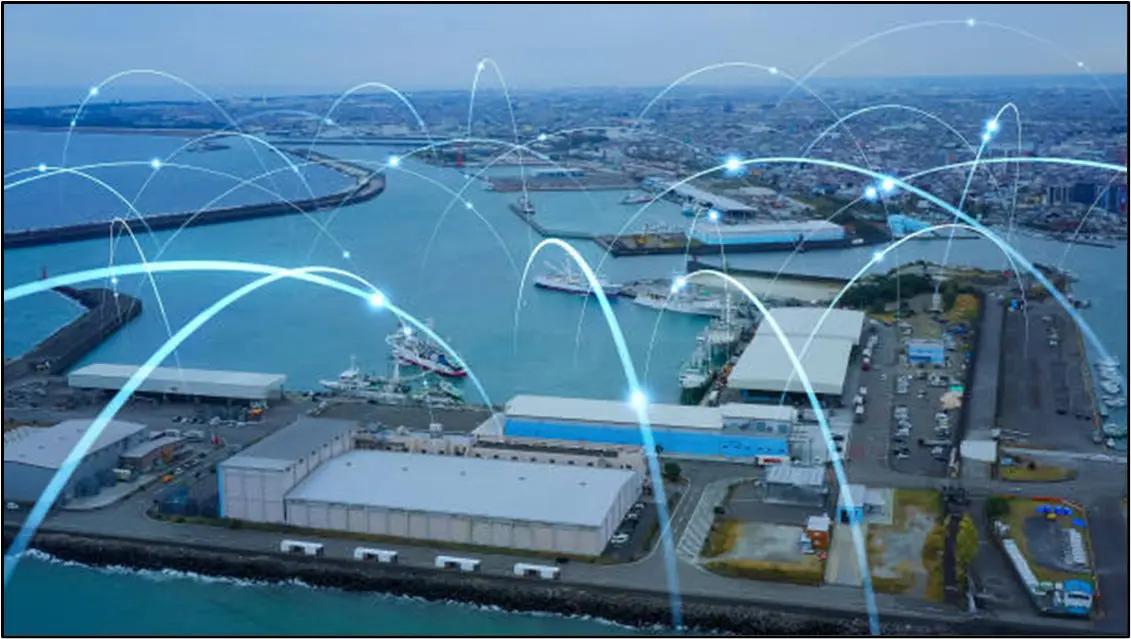
Recent statistics are stark:
- In the first half of 2024 alone, over 1,800 vessels were targeted by cyber threats.
- 2024 has seen 23,400 malware detections, 178 ransomware attacks, and a staggering 50+ billion firewall events in the maritime sector.
- The average cost of a cyberattack on a maritime organization exceeds USD 550,000.
- The US Coast Guard’s CTIME report confirms growing cyber risks, supply chain vulnerabilities, and the spread of malware from corporate networks to operational technology (OT security maritime) systems.
Bridging the gap in this domain requires:
- Robust IT and OT network segregation – Protecting critical operational technology from cyber threats.
- Regular vulnerability assessments and penetration testing.
- Employee awareness training on phishing and social engineering.
- Incident response plans specifically for cyberattacks.
The Path Forward: A Secure and Resilient Future
The ISPS Code remains a vital framework, but its true power is unlocked when ports move beyond a checklist mentality. By embracing proactive risk management, continuous high-quality training, strategic adoption of advanced security technologies, and a relentless focus on cybersecurity, ports can transform compliance into a competitive advantage. This holistic approach not only safeguards critical infrastructure and global trade but also ensures the resilience and prosperity of the entire maritime supply chain. Investing in a culture of security awareness and digital transformation is not just about meeting regulations; it’s about securing the gateway to a safer, more efficient, and more connected global future.
