
| Reported: 21 October 2025 | Location: Niger |
Security Event. On the night of 21 October 2025, an American missionary pilot, identified as Kevin Rideout, was kidnapped from his home in the Plateau neighbourhood of Niamey. Rideout, who is serving with the Catholic evangelical group, Serving in Mission (SIM), lived just a few streets away from the presidential palace in what was believed to be a relatively safe area of the capital city.
The motive for the kidnapping has not been officially confirmed, but the abduction was believed to have been carried out by three armed men travelling in a Toyota Corolla. The victim was quickly taken out of the city, reportedly toward the Tillabéri region near the Mali border, an area where jihadist groups linked to Islamic State in the Greater Sahara (ISGS) and Al Qaeda in the Islamic Maghreb (AQIM) are known to operate.
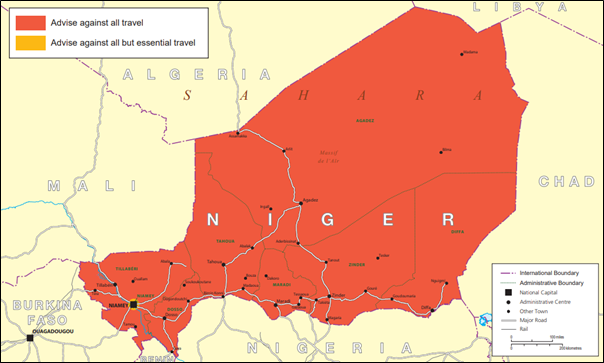
Fig 1. Niger – The UK FCDO advises against travel outside of the Capital Region.
Comment. Although in different eras and contexts, the kidnapping of Kevin Rideout draws parallels with the abduction of the Canadian Diplomat, Robert Fowler, in Niger in 2008. Fowler was taken by militants claiming to be from AQIM and held hostage for 130 days before he and his colleague Louis Guay were freed following negotiations led by the U.N. and regional leaders. Both incidents reflect today’s IS-affiliated threat networks, which are exploiting weakened state control in Niger’s heartland and other countries across the Sahel, such as Mali and Burkina Faso.
NGOs, missionaries, extractive industry workers, diplomats, and business travellers are considered high-value targets due to perceived ransom potential or political leverage. The U.S. Embassy in Niamey has issued a security alert warning that American citizens “remain at a heightened risk of kidnapping throughout Niger, including in the capital city.” The threat is believed to extend to other Western nationalities.
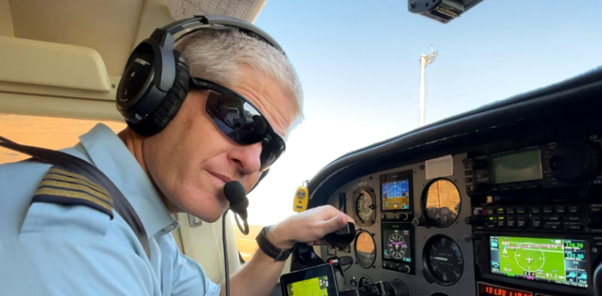
Fig 2. Kevin Rideout was working for a Christian Aid Organisation (The Catholic Herald).
Assessment. It is likely that Rideout has been taken for financial motives (ransom payments). It also serves to promote ISGS and AQIM’s capability to operate in the heart of government-controlled areas with apparent impunity.
This incident highlights the vulnerability of deployed staff and travellers even in what appear to be relatively safe areas of countries, where complex threats from terrorism, armed conflict, and criminal opportunism are present. It is a critical requirement for organisations to uphold their corporate duty of care responsibilities by proactively equipping travelling employees with the tools to identify and mitigate risk in unfamiliar settings.
Each company will require a bespoke solution tailored to its own requirements and the country in which its staff operate. However, Security Awareness in Foreign Environments (SAFE) and Hostile Environment Awareness Training (HEAT), which includes Kidnap Avoidance, form the basis of any preparation for companies that deploy their employees to unfamiliar or sometimes semi-permissive locations.
Companies should consider a strategy complete with policies and plans, access to security intelligence, employee training, and, if appropriate, the use of monitoring, SOS alert, and emergency response apps. These tools help build practical knowledge through structured modules that cover key areas, including thorough destination research, secure in-country navigation, emergency first-aid techniques, and risk identification. Ultimately, such targeted preparation not only minimises personal vulnerabilities but also strengthens organisational resilience, ensuring seamless operations amid rising urban uncertainties worldwide.
